Ranking on search engines now means that you can’t ignore AI content optimization.
Search engines are smarter than ever, and so are the tools we use to optimize for them. And in the wake of AI redefining SEO content creation, it has become an essential part of how content teams, agencies, and even solo bloggers create content that actually ranks.
I’ve worked in the content industry for 6+ years and am seeing the changes firsthand, and if there’s one thing I can tell you, it’s that traditional SEO practices without AI content optimization just don’t scale anymore.
So, in this guide, I’ll break down what AI content optimization really means, how it works, the benefits it brings, and the best tools to make it part of your workflow.
Let’s start with a definition.
What Is AI Content Optimization?
AI content optimization is the process of using artificial intelligence to refine and align your content with search intent and search engine algorithms.
Think of it like having a second set of eyes, except those eyes are trained on thousands of top-ranking articles, analyzing patterns, and giving you real-time guidance.
With AI, you can:
- Identify the best keywords (primary and secondary) to target.
- Adjust readability and structure based on proven ranking factors.
- Fill content gaps that your competitors are already leveraging.
- Align the tone and coverage with what your audience expects.
The goal isn’t to replace human creativity but to augment it with data-driven insights.
Writers still bring personality, the brand’s tone of voice, and storytelling. AI ensures that content also checks all the technical SEO boxes.
Examples of AI Content Optimization
1. AI for Blog Posts
Writing blogs that rank isn’t just about putting words on a page—it’s about aligning every post with search intent.
With SEOBoost, you can start with a Topic Report to uncover high-potential angles, then use the Content Briefs to generate a roadmap of subtopics, questions, and keyword suggestions.
As you draft, the Content Optimization editor gives real-time guidance on keyword placement, readability, and structure.
For example, if your target keyword is benefits of content marketing, SEOBoost will flag missing subtopics competitors are covering (like “brand awareness” or “lead generation”) and prompt you to add them. This ensures your blog post isn’t just optimized—it’s comprehensive enough to outrank others.
2. AI for Product Pages
Product pages often struggle with balancing SEO keywords and persuasive copy.
SEOBoost bridges that gap by providing keyword relevance insights alongside on-page optimization suggestions. You can optimize headlines, descriptions, and CTAs while making sure search-friendly terms are naturally integrated. The platform also suggests internal linking opportunities to connect your product pages with related blogs or category pages, improving both rankings and conversions.
If you’re selling a product like “organic skincare serum,” SEOBoost will recommend secondary keywords, such as “cruelty-free skincare” or “anti-aging serum benefits,” giving you an SEO edge without sacrificing user appeal.
3. AI for Content Refresh
Older content often loses visibility over time—a phenomenon called content decay. SEOBoost makes refreshing these posts much easier. Its Content Audit feature scans your library and highlights outdated, underperforming, or missing key SEO elements.
Once identified, you can update them using real-time optimization suggestions and reintroduce fresh keywords surfaced by Topic Reports.
7 Ways AI Content Optimization Works
1. Data Collection and SERP Analysis
AI-powered SEO tools start by analyzing the top-ranking pages for your target keyword. Instead of you manually checking competitors, the AI scrapes thousands of data points in seconds—word count, keyword placement, content structure, multimedia use, and even readability scores.
If you’re targeting “AI for content marketing,” the AI might reveal that the top 10 results all include sections on “AI copywriting tools” and “personalization,” highlighting gaps you need to cover to stay competitive.
AI doesn’t just optimize your content in isolation—it mirrors the SERP landscape. By analyzing current search results, you can see which formats are ranking (listicles, guides, videos), which questions users are asking, and what angle competitors are missing.
If you’re writing about “AI for SEO,” an AI tool might show that all top results have sections on “AI keyword research,” but none address “AI link building.” That’s your chance to differentiate and rank.
2. Machine Learning Insights
Once the data is collected, machine learning models step in to identify patterns and opportunities that humans would likely miss. These models continuously learn from massive datasets, refining their ability to predict which content will perform best.
An AI model might detect that blogs ranking for “ecommerce SEO” consistently use FAQs and schema markup. Without AI, you might not notice these subtle yet impactful trends that influence rankings.
3. Natural Language Processing (NLP)
AI doesn’t just crunch numbers—it understands context and semantics. Through natural language processing (NLP), AI tools analyze how words and phrases relate to one another, mirroring how Google’s algorithms (such as BERT and MUM) interpret content.
For a keyword like “email marketing,” NLP-powered tools won’t just suggest exact matches. They’ll recommend related entities like “email automation,” “open rates,” and “personalized campaigns,” giving your content topical depth that aligns with how Google interprets user intent.
4. Real-Time Feedback While You Write
The most practical benefit of AI is real-time optimization. Instead of publishing a draft and running it through multiple audits, tools like SEOBoost give you instant feedback on keyword density, readability, internal links, and missing on-page elements.
If you’re drafting a blog on “secondary keywords,” SEOBoost might flag that you haven’t included enough semantic terms like “long-tail keywords” or “search intent,” helping you fix it before publishing.
AI-powered tools like SEOBoost provide feedback as you write—on keyword placement, readability, internal links, and even tone. This real-time optimization ensures you’re not just publishing content quickly, but publishing high-quality, SEO-ready content from the start.
5. Data-Driven Insights for SEO Success
One of the most powerful aspects of AI content optimization is its ability to transform raw data into actionable insights.
In traditional SEO, you’d spend hours exporting CSV files, filtering through keyword reports, and manually comparing competitor content. AI eliminates this inefficiency by analyzing massive datasets in seconds and surfacing exactly what you need to improve.
Search engines reward content that aligns with user intent, topical authority, and technical soundness.
But understanding all these factors at scale requires more data than humans can process on their own. That’s why AI-driven insights are such a game-changer—they give you clarity where guesswork used to dominate.
6. Keyword Discovery and Expansion
One of the most powerful applications of AI is its ability to identify new keyword opportunities that traditional tools cannot provide. While standard keyword research focuses on volume and competition, AI digs deeper, identifying semantic relationships and long-tail variations you might otherwise miss.
If your primary keyword is “content marketing tools,” AI can recommend related entities such as “editorial calendar software” or “AI content optimization platforms,” helping you expand into clusters that strengthen your topical authority.
7. Content Gap Identification
AI doesn’t just tell you what you have—it shows you what you’re missing. By analyzing top-performing competitor pages, AI highlights subtopics, FAQs, and content angles you may have overlooked.
You might publish a blog on “SEO for startups,” but AI could reveal that competitors include detailed sections on “budget-friendly SEO tools” and “common SEO mistakes for new businesses.” Adding these gaps to your article makes it more competitive.
How to Use AI Content Optimization for SEO
Step 1: Identify Target Keywords
One of the most challenging aspects of SEO is determining which keywords are worth your time.
SEOBoost’s Topic Reports make this effortless by pulling real-time data from SERPs and clustering keywords by both topic and intent. Instead of handing you a generic keyword list, it shows you which terms your audience is searching for, how competitive they are, and even the “ranking potential” of each keyword.

For example, if you’re targeting content marketing tools, SEOBoost might surface related queries like AI content optimization tools or content audit checklists that competitors are ranking for, but you’re not. That insight lets you prioritize smarter and build content that’s both strategic and rankable.
Long-tail keywords are gold for conversions, but they’re notoriously hard to uncover manually. AI excels here by analyzing user intent and surfacing high-potential long-tail phrases that traditional keyword tools often miss.
Step 2: Create or Optimize Content with Briefs & Real-Time Editor
AI isn’t just about ranking—it also ensures content resonates with users. Google’s EEAT (Experience, Expertise, Authoritativeness, Trustworthiness) framework emphasizes quality over keyword stuffing. AI assists by flagging readability issues, improving structure, and making sure the piece has comprehensive topical coverage.
Once keywords are chosen, SEOBoost helps you turn them into actionable content plans. Its Content Briefs generate detailed outlines, complete with headings, subtopics, keyword suggestions, and SEO guidelines.
This means writers never start from scratch—they follow a roadmap based on what’s actually working in search. From there, the Content Optimization editor takes over.
As you draft, it gives real-time feedback on keyword use, readability, structure, meta tags, and even internal linking opportunities. It’s like writing with a built-in SEO coach, ensuring every piece is polished before it’s published.
Step 3: Track and Monitor Performance With Content Audits
Publishing content isn’t the finish line—it’s just the start.
At the end of the day, what matters is rankings—and AI bridges the gap between what Google’s algorithms reward and what writers produce. Instead of relying solely on intuition, AI content optimization ensures every piece is data-backed, intent-driven, and aligned with SERP expectations.
SEOBoost’s Content Audits allow you to measure how your updates are performing continuously. Instead of guessing why a page slipped in rankings, you’ll see whether it’s because competitors refreshed their content, your keyword relevance declined, or your internal links are too thin.
You can compare before-and-after performance, track ranking shifts, and prioritize updates for pages that are losing traffic or visibility. This closes the loop between strategy and outcomes, making it easy to prove ROI to clients or stakeholders.
Step 4: Refine and Scale Content Production
AI completely changes the speed and scale of SEO. What once took entire afternoons of manual research, spreadsheet sorting, and back-and-forth editing can now be streamlined into a few clicks. This efficiency isn’t just about saving time—it’s about scaling content production without sacrificing quality.
When I manage blog production across multiple projects, I rely on SEOBoost to instantly cluster keywords, suggest optimization improvements, and highlight missing on-page SEO elements. Without AI, I’d have to manually coordinate between keyword tools, editorial calendars, and Google Docs. The time saved translates directly into producing more high-value content in less time.
When you’re dealing with dozens or hundreds of articles, keeping track of what’s published, what’s in review, and what needs updating can get chaotic fast.
SEOBoost’s Content Management system solves this by acting as a centralized workspace for your entire SEO content strategy. Every post has its own project space where you can attach briefs, track optimization scores, and assign writers.
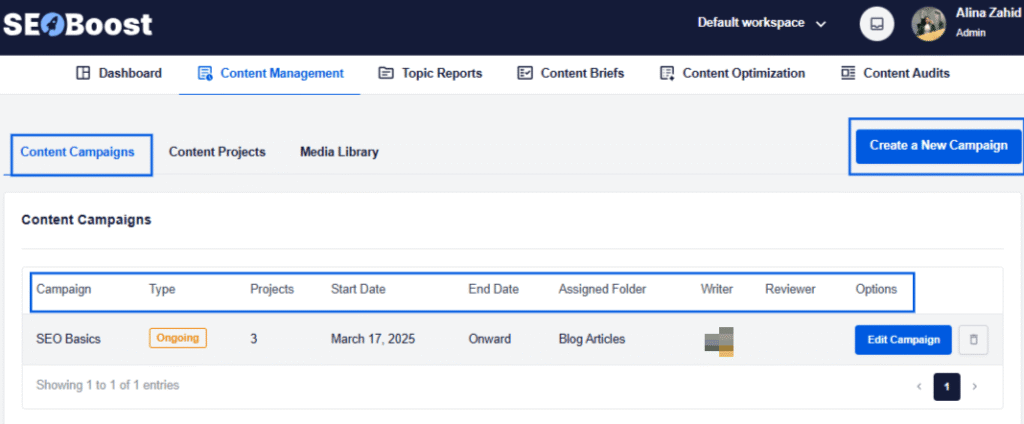
Even better, it connects directly to real-time SEO metrics—so you know at a glance which posts are thriving and which need attention. For scaling teams, this feature replaces spreadsheets, project management tools, and scattered Slack threads with a single, SEO-optimized hub.
Top 3 AI Tools for Content Optimization
Here’s a direct comparison table that puts SEOBoost, SurferSEO, and Clearscope side by side, focusing on features, AI capabilities, and pricing.
| Tool | AI-Powered Features | Why I Like The Tool | Pricing (Monthly) | Best For |
| SEOBoost | Real-time content editor, Topic Reports, AI-generated Content Briefs, Content Audits, full Content Management system | Combines strategy + optimization + workflow; covers entire content lifecycle | Essentials $30 · Team $60 · Agency $100 | Content teams, agencies, writers scaling production while tracking ROI |
| SurferSEO | Live SEO scoring editor, SERP Analyzer, Audit tool, and Keyword Research | Great for benchmarking against SERPs and mirroring competitor content structures | Basic $59 · Pro $119 · Business $239+ | Writers/SEOs who want fast structural guidance for individual articles |
| Clearscope | Content Reports with semantic keyword suggestions, Keyword Discovery, Content Inventory, Content Grading (A–F) | Excels at semantic depth & topical coverage; premium for polished, enterprise-level content | Essentials $189 · Business $399+ | Large teams or enterprises needing consistent, authoritative content |
1. SEOBoost

SEOBoost is built as a full-stack AI content optimization platform, designed to cover the entire content lifecycle, from keyword research and planning to optimization, auditing, and management.
Unlike most SEO tools that only analyze after publishing, SEOBoost provides real-time AI-driven recommendations as you write.
Its features include a content editor that scores drafts in real-time, flagging issues with keyword usage, readability, internal linking, and metadata so that you can publish SEO-ready content confidently.
The Topic Reports analyze SERPs to uncover trending keywords, intent clusters, and competitive gaps. At the same time, Content Briefs transform those insights into ready-to-use outlines with headings, subtopics, and keyword recommendations.
Beyond creation, SEOBoost also excels in content audits, highlighting underperforming or outdated pieces. Its Content Management system ties everything together, organizing your strategy in one place with status tracking, assigned tasks, and SEO scoring.
Pricing: SEOBoost starts at $30/month for Essentials, with more advanced Team ($60/month) and Agency ($100/month) plans that expand briefs, reports, and collaboration features. A 14-day free trial is available.
2. SurferSEO

SurferSEO is one of the most popular AI-powered on-page optimization tools, known for its ability to benchmark your content against SERP leaders. It focuses heavily on aligning structure, keyword density, and length with what’s currently ranking.
At its core, Surfer’s Content Editor gives a live SEO score as you write, with AI-driven recommendations for keyword density, suggested headings, and content length based on competitor analysis.
Its SERP Analyzer digs into the top-ranking pages for a keyword to surface what’s working for them, whether it’s word count, backlink profiles, or semantic terms. The Audit Tool helps you review existing content and identify missing optimizations, while its Keyword Research feature supports the discovery of related opportunities.
While SurferSEO is strong for fine-tuning, its scope is narrower than SEOBoost’s, as it lacks built-in management and workflow features.
Pricing: SurferSEO starts at $59/month for Basic, with Pro ($119/month) and Business ($239/month) tiers that expand editor credits and audit limits. Custom enterprise plans are also available.
3. Clearscope
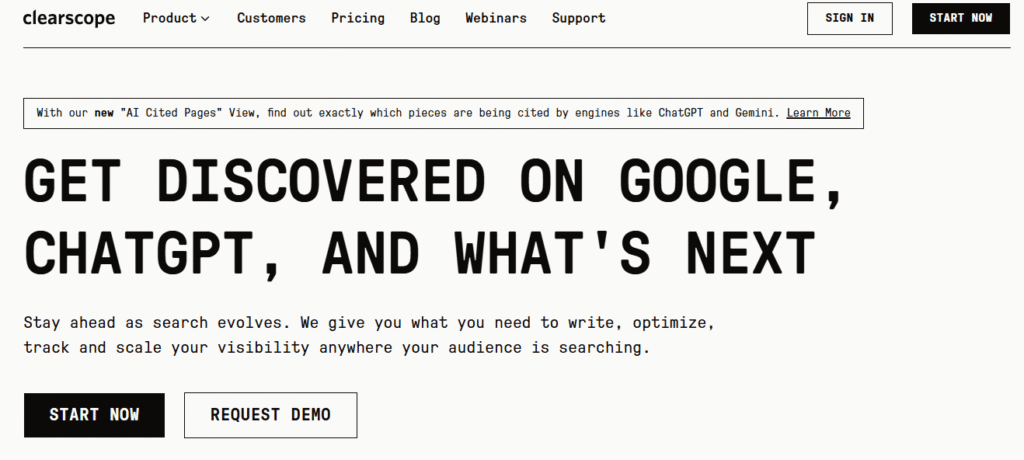
Clearscope positions itself as a premium AI content optimization platform, emphasizing semantic keyword coverage and content clarity. It’s widely used by larger content teams who need consistent, polished, and authoritative writing.
Its Content Reports evaluate your drafts against competitors and provide AI-powered keyword and entity suggestions to boost topical depth. The Keyword Discovery feature ensures that you cover related terms associated with your topic on Google.
At the same time, its Content Inventory provides visibility into your entire library, highlighting which pages require updates or further optimization. Clearscope also provides content grading (A+ to F), making it easy to benchmark drafts against both SEO and readability standards.
While powerful, it’s priced higher than most tools and works best for enterprise-level strategies that require semantic precision.
Pricing: Clearscope starts at $189/month for Essentials and goes up to $399/month for Business, with enterprise packages available for large-scale teams.
Final Word
Whether you’re a writer trying to improve readability or an SEO manager juggling hundreds of pages, I hope this guide can become your playbook for AI content optimization.
One piece of advice I’d leave you with is that using an AI tool can help you improve your workflows and significantly speed up production.
And the one AI tool I swear by (and use myself every day) is SEOBoost. It’s great for content ideation, optimization, and even audits.
So, try it for free today and see how it can quickly ramp up your optimization process.
FAQs
What is AI content optimization?
AI content optimization is the process of using artificial intelligence tools to improve your content’s visibility, relevance, and performance in search engines. Instead of manually guessing which keywords, headings, or subtopics to include, AI tools like SEOBoost analyze real-time SERP data and provide actionable recommendations.
What are AI content optimization tools?
AI content optimization tools are platforms that utilize machine learning and natural language processing (NLP) to guide writers, marketers, and SEO professionals in enhancing their content. Popular examples include SEOBoost, SurferSEO, and Clearscope.
How to optimize content for AI search?
Optimizing for AI-driven search engines (like Google’s Search Generative Experience) means going beyond keyword stuffing. You need to focus on topical relevance, structured content, and semantic depth.