The EEAT framework is one of those SEO concepts that people talk about a lot but rarely implement consistently. I’ve watched teams spend weeks perfecting keyword placement, polishing headers, and chasing backlinks, only to wonder why the page still can’t break into the top results.
When that happens, it’s usually not because the page is missing a keyword. It’s because Google doesn’t feel confident ranking it over competitors that demonstrate stronger credibility signals.
That’s why I treat Google’s EEAT framework as the quality layer that sits atop every SEO effort, especially now when search engines are better than ever at identifying content that looks like it was written “to rank” versus content that was written by someone who genuinely understands the topic and can be trusted.
The simplest way I explain it is this: EEAT is how Google decides whether your content deserves to be taken seriously.
So, in this guide, I’ll walk you through what the EEAT framework is and how to create content that blends in and content that stands out.
What Is Google’s EEAT Framework?
Most people treat EEAT like a checklist, but that’s not how it works in real life or in search. You can’t “add EEAT” by sprinkling in a credential line or putting an author name at the top.
EEAT is demonstrated through how you write, structure, cite, and maintain content, and through the signals your site sends throughout the entire user journey.
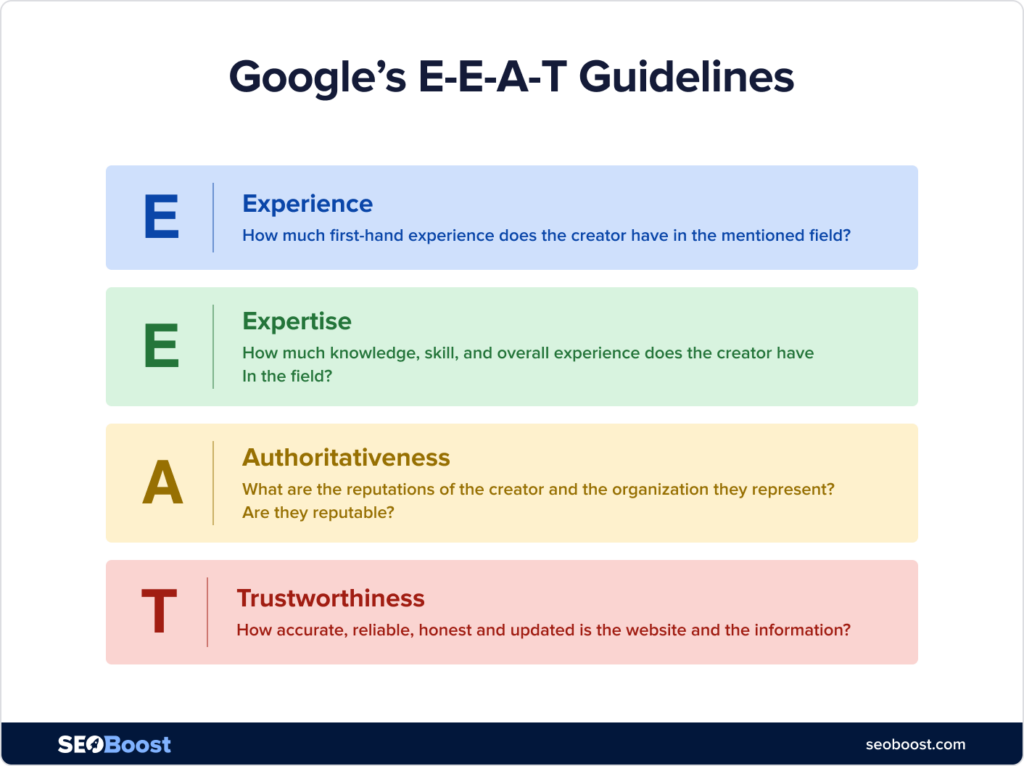
EEAT stands for:
- Experience
- Expertise
- Authority
- Trust
This means that EEAT isn’t a single ranking factor you can optimize directly. It comes from Google’s Search Quality Rater Guidelines (human reviewers use it to evaluate results), but the underlying idea aligns closely with what Google’s systems aim to reward: content that is helpful, accurate, and reliable.
So when someone asks me, “Does EEAT help rankings?” my answer is: EEAT helps you earn the kind of quality signals that rankings tend to follow.
Why EEAT Framework Matters In 2026?
The reason EEAT feels “bigger” in 2026 is largely because of AI. The internet now feels crowded with content that’s technically acceptable, grammatically clean, and semantically relevant, but can still feel repetitive or shallow.
That’s because AI has raised the baseline. Now, “acceptable” content is everywhere, but EEAT is what pushes content into the top tier.
In practice, EEAT matters most when:
- The search results are full of major brands and established publishers.
- The query requires nuanced judgment, real experience, or up-to-date insights.
- Readers need confidence before they take action (buy, book, subscribe, treat, invest).
- The topic impacts someone’s money, health, safety, or well-being (classic Your Money, Your Life or ‘YMYL’ topics).
Even outside YMYL, I’ve seen EEAT make a clear difference for software reviews, marketing advice, “best tools” roundups, travel content, and local business services, basically any niche where readers want to know about the writer’s actual experience related to what they’re talking about.
So, when editing content for EEAT, I want you to start asking yourself: Does this page prove that we’re credible?
A page proves credibility when it shows:
- The writer has done the thing (experience)
- Understands the topic beyond surface definitions (expertise)
- Is recognized or supported by broader signals (authority)
- Provides a safe, accurate, transparent experience (trust)
That’s why a short article can outrank a long one if someone with real experience and better trust signals clearly writes it. And it’s why generic content, no matter how “optimized,” struggles in competitive SERPs.
Google’s EEAT Framework: Explained
Now that you understand what the EEAT framework is and how it works, let’s dive into its components and how you can optimize content for each.
Experience: How Google Evaluates First-Hand Knowledge
Experience is about first-hand involvement.
For me, it answers the question: Has the person creating this content actually interacted with the subject in the real world?
When Google added Experience to the original EAT model, it wasn’t just a naming update. It was a response to a real problem: the internet became flooded with content written by people who had read about something, but had never actually done it. The search results were technically accurate but emotionally flat and practically useless.
This applies far beyond obvious niches like travel, food, or product reviews. And Google looks for experience signals in:
- Business advice written by founders or consultants
- SEO guides written by people who’ve ranked content
- Software reviews written by users who’ve tested the tools
- Marketing advice written by marketers who’ve executed campaigns
- Local service pages written by people who actually operate in that area
The biggest mistake I see is writers trying to declare experience rather than demonstrate it.
Now, Google doesn’t have a checkbox for “has experience.” Instead, it infers experience through patterns.
And some of the strongest inferred signals include naturally used first-person phrasing, examples tied to context, consistent positioning across related content, and alignment between the author, topic, and site theme.
For example, on our SEOBoost blog, I regularly publish content on SEO, marketing, and strategies to maintain topical consistency, which Google can reasonably infer indicates the author has hands-on experience.
Expertise: How Google Recognizes Depth, Accuracy, and Subject Mastery
If you’re thinking that your expertise can be measured solely through your job title, degree, or certifications alone, you couldn’t be more wrong.
See, Google doesn’t require formal credentials for most topics. What it looks for instead is demonstrated understanding.
If experience answers the question “Have you actually done this?”, expertise answers a different but equally important one: “Do you understand this topic deeply enough to guide someone else?”
With advanced AI content dominating most search engines, Google has become very good at distinguishing between content that merely mentions concepts and content that genuinely explains them. This is where many articles fall short. They touch on ideas without unpacking them, define terms without context, or repeat what’s already ranking without adding clarity.
And so, expert-level content shows that the writer:
- Understands how concepts relate to each other
- Can explain why something works, not just what works
- Anticipates follow-up questions a reader might have
- Avoids oversimplification when nuance matters
- Communicates with confidence and precision
In short, expertise is about clarity with depth.
A common misconception is that expertise equals length. It doesn’t.
I’ve seen 4,000-word articles that still feel shallow because they repeat ideas without advancing understanding. I’ve also seen 1,200-word articles dominate because every section is intentional, well-structured, and informative. That’s because Google’s systems are increasingly good at detecting whether a page actually answers the query fully.
So, how to demonstrate expertise without sounding academic?
One mistake writers make is thinking expert content has to sound formal or academic. In fact, overly academic writing can reduce perceived expertise if it obscures meaning.
The goal is to make complex ideas understandable, not to prove how much you know. When readers feel smarter after reading your content, that’s a strong signal of expertise.
And structure plays a bigger role in expertise than most people realize.
Well-structured content introduces concepts in the right order, builds on earlier explanations, groups related ideas, and avoids jumping randomly between topics.
This helps both readers and search engines understand that the author has command over the subject. Poor structure, even with good information, can make content feel scattered, which weakens the signals of expertise.
Over time, Google builds a picture of whether a site consistently covers a topic with depth and accuracy. When multiple articles reinforce each other, using consistent terminology, frameworks, and explanations, expertise becomes easier to infer. This is why sites that focus tightly on a niche often outperform broader sites, even with fewer backlinks.
Authority: How Google Decides Who Deserves to Be Ranked
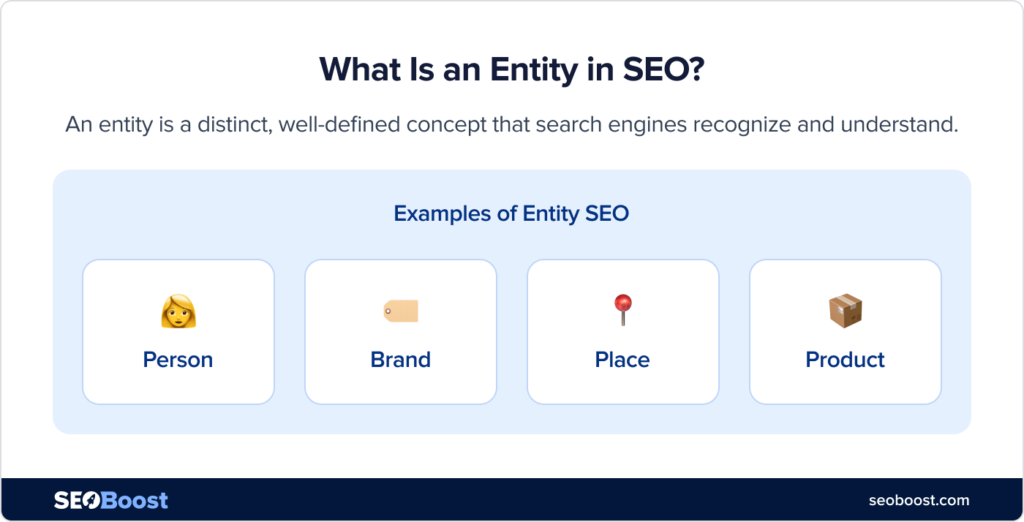
Authority is often the most misunderstood part of EEAT because people reduce it to one thing: backlinks. While links matter, authority is broader than link count and encompasses entity SEO, brand recognition, consistency, and topical prominence.
At its core, authority answers this question: “Is this a source that others would reasonably rely on?”
Google doesn’t expect every site to be a household name. What it looks for instead is contextual authority and whether your site is a credible source within its specific niche.
An authoritative site:
- Consistently publishes content around a defined subject area
- Demonstrates depth across related topics, not just one page
- Is referenced, cited, or acknowledged elsewhere (directly or indirectly)
- Maintains a clear identity and focus over time
In other words, authority is built through repetition and reinforcement, not one-off wins.
A small site can be authoritative in a narrow niche, while a large site can lack authority if its content is scattered or inconsistent.
Why authority takes time (and why that’s okay)
Authority is the slowest EEAT signal to build, and that’s because Google is cautious by design. It doesn’t immediately trust new sites, even if the content looks good. Instead, it watches how consistently a site shows up, how stable its messaging is, and whether its content continues to perform well over time.
This is why authority often feels invisible at first. You might publish excellent content and still struggle to rank in competitive SERPs. The important thing to understand is that authority compounds. Once a site is recognized as credible within a niche, new content tends to rank faster and more reliably.
More importantly, Google doesn’t evaluate authority in just one place. It looks at authority across:
- Page level (is this specific page strong?)
- Site level (does this site consistently cover this topic?)
- Author level (is this person associated with this subject?)
- Entity level (is this brand or name recognized elsewhere?)
This is why random, disconnected content weakens authority, even if individual articles are well-written, making topical authority far more relevant.
And while backlinks remain important, authority doesn’t rely on them alone.
Google also considers:
- Internal linking structures
- Content longevity and stability
- Brand mentions (even without links)
- Consistent citations across the web
- User behavior signals (returning visitors, engagement)
This is why some sites rank surprisingly well even with fewer links: their authority is reinforced by multiple signals working together.
Trust: The Foundation That Overrides Everything Else in EEAT
If experience, expertise, and authority are signals that support rankings, trust is the signal that can override them all.
You can have real experience, write with expert-level depth, and even have authority in your niche. But if Google doesn’t trust your content or your site, none of that matters.
For Google, trust is about safety, accuracy, transparency, and reliability.
At a basic level, Google wants to ensure that the information is not misleading, that the source is accountable, that users are not being manipulated, and that the content can be relied on for real-world decisions.
Trust is especially critical for YMYL topics, but it now affects every type of content. Even a marketing blog or software guide can lose rankings if it comes across as deceptive, outdated, or opaque.
So, how does Google measure trust?
Google evaluates it across the entire user experience, including:
- Content itself
- Brand presence
- Website structure
- Transparency signals
- Historical behavior
This means that the fastest way to lose trust is to be inaccurate. And this doesn’t always mean being factually wrong. It can also mean oversimplifying complex topics or presenting opinions as facts.
Trust grows when users (and search engines) can clearly see who is behind the content and why it exists.
Strong transparency signals include:
- Clear author attribution
- Accessible About and Contact pages
- Honest disclosure of affiliations or incentives
- Realistic claims (no guaranteed outcomes)
- Clear separation between editorial content and promotion
Content that hides search intent, especially commercial intent, tends to perform worse over time, even if it initially ranks.
More importantly, Google also evaluates trust through site security (HTTPS), mobile usability, and navigation. And so, a site that feels unsafe or spammy weakens trust regardless of how good the content is.
EEAT by Page Type
One of the biggest EEAT mistakes I see is treating it as a one-size-fits-all checklist. In reality, EEAT is contextual. Google evaluates credibility differently depending on what the page is trying to do and what kind of decision the user is making.
A blog post, a comparison page, a local service page, and a SaaS landing page all need EEAT, but it needs to be expressed differently for each.
So, here’s how I think about EEAT by page type.
1. Informational Blog Posts
For informational or evergreen content, Google primarily looks for experience and expertise, supported by trust.
That’s because readers want guidance from someone who has actually done the thing. And so, the content must be accurate, complete, and logically structured. Authority plays a smaller role here than in commercial pages, but it still helps.
Strong EEAT signals for blog posts include:
- Accurate, up-to-date information
- Examples, scenarios, or lessons learned
- Clear, confident explanations that go beyond definitions
- Thoughtful structure that anticipates follow-up questions
2. “Best Tools,” Reviews, and Comparison Pages
These pages are heavily scrutinized for experience and trust.
Google is especially careful with content that recommends products, software, or services because users are making purchasing decisions. If experience isn’t obvious, these pages often struggle to rank, even if they’re long and well-formatted.
For these pages, EEAT looks like:
- Honest limitations and tradeoffs
- Balanced pros and cons, not just praise
- Clear evidence of first-hand usage or evaluation
- Nuanced comparisons instead of feature copying
Authority also matters more here than in basic blogs, because Google wants to know whether the source has a history of making reliable recommendations. And so, pages that feel overly promotional or vague tend to lose trust fast.
3. SaaS Product Pages and Feature Pages
For SaaS and product-led pages, trust and authority take priority, supported by expertise.
Users aren’t just looking for information, but they’re also evaluating whether a product is reliable, safe, and worth adopting. Google reflects this by favoring pages that feel transparent, stable, and well-supported.
EEAT signals for SaaS pages include:
- Visible company information
- Consistent messaging across feature pages
- Clear explanations of what the product does and doesn’t
- Up-to-date content that reflects the current functionality of the product
Experience here often shows up indirectly through clarity, accuracy, and alignment with how real users think about the problem.
4. Local Business and Service Pages
Local pages rely heavily on trust and experience, with authority being geographically contextual.
Google wants to rank businesses that feel real, accessible, and reliable, especially when users may contact, visit, or hire them.
Strong EEAT signals for local pages include:
- Clear business identity and location information
- Consistent details across the site
- Practical descriptions of services
- Signs of real-world operation
- Language that reflects local understanding
A local service page written like a generic SEO template often underperforms because it lacks lived context.
5. Your Money, Your Life or YMYL Content
This category usually covers niches like health, finance, legal, and safety, and is where EEAT is strictest.
For YMYL topics, Google places extreme emphasis on trust, expertise, and accuracy. Experience still matters, but it must be paired with responsibility.
EEAT signals here include:
- Precise, careful language
- Avoidance of absolute claims
- Clear boundaries between information and advice
Even small inaccuracies or oversimplifications can severely hurt performance in these niches.
6. Category Pages and Hub Pages
Hub pages don’t need deep experience narratives, but they rely heavily on authority and trust.
These pages signal topical breadth and help Google understand how content fits together. EEAT here is expressed through clear organization, logical content grouping, accurate summaries, and internal consistency.
When done well, hub pages strengthen authority across the entire site.
7. About Pages and Author Pages
While not ranking pages themselves, optimizing author pages strongly influences trust and authority. That’s because they help Google (and users) understand who is behind the content, why the site exists, and what qualifies the author or brand to speak on the topic.
The most important takeaway here is that EEAT expression should match user intent. When EEAT signals align with intent, content feels natural.
Final Word
EEAT isn’t something you add at the end of writing — it’s something you build into how you think about content from the start.
What’s important to understand is that EEAT doesn’t require you to be famous, credentialed, or backed by a massive brand. It requires clarity of purpose, consistency in your niche, and content that proves, rather than claims, credibility.
Small sites can build strong EEAT. Solo creators can build strong EEAT. New brands can build strong EEAT. But they all do it the same way: by aligning experience, expertise, authority, and trust with real user intent.
And when you do that, SEO becomes less about chasing algorithms and more about earning visibility naturally.
FAQs: Google’s EEAT Framework
What is Google’s EEAT framework?
Google’s EEAT framework stands for Experience, Expertise, Authority, and Trust. It’s a quality model used in Google’s Search Quality Rater Guidelines to evaluate the credibility, reliability, and helpfulness of content. While EEAT itself isn’t a direct ranking factor, it strongly influences how Google’s systems assess content quality and trustworthiness.
Is EEAT a ranking factor in SEO?
EEAT is not a single, measurable ranking factor. Instead, it represents a group of quality signals that Google’s algorithms attempt to reward. Pages that demonstrate strong EEAT tend to perform better because they align with Google’s goal of ranking helpful, accurate, and trustworthy content.
Does EEAT matter for non-YMYL websites?
Yes. While EEAT is most critical for YMYL (Your Money or Your Life) topics like health and finance, it now affects almost every niche. Product reviews, marketing advice, software comparisons, and even informational blogs benefit from strong EEAT signals, especially in competitive search results.
Can AI-written content meet EEAT standards?
AI-assisted content can meet EEAT standards if it’s carefully edited, enriched with human experience, and fact-checked for accuracy. Content that relies entirely on AI without human context or responsibility often struggles to demonstrate experience and trust, which are critical for EEAT.