Search engines are constantly evolving, user behavior is shifting, and AI has completely changed how content is created, optimized, and evaluated. That means the SEO best practices that have worked so far might not get you far in 2026 if you don’t adapt your strategy to the changes.
When I started working with SEO years ago, ranking a page mainly was about including keywords, publishing consistently, and building links. Today, Google is much smarter. It understands context, intent, quality signals, entity relationships, brand trust, and content depth, and uses AI models to evaluate them in real time.
But here’s the good news: SEO is still one of the highest-ROI channels for any business, that is, if you follow a strategy grounded in intent, depth, technical health, and ongoing optimization.
So, in this guide, I’m breaking down the exact SEO best practices I use with SaaS brands, agencies, bloggers, and small businesses to rank content on page 1 consistently. These practices are based on real results, recent Google updates, and using tools like SEOBoost, which I rely on daily to turn SEO into a predictable, data-backed system.
Let’s start with a quick definition.
- What Are SEO Best Practices?
- 8 SEO Best Practices To Dominate Rankings in 2026
- 1. Prioritize Search Intent Above Everything Else
- 2. Build Content for Depth, Not Fluff
- 3. Optimize Your Content as You Write (Not After Publishing)
- 4. Improve User Experience (UX) as a Ranking Signal
- 5. Strengthen Internal Linking To Build Topical Authority
- 6. Use AI Tools Properly (Draft With AI, Optimize With SEOBoost)
- 7. Update and Refine Existing Content Regularly
- 8. Build Entity Signals and Brand Authority
- Final Word
- FAQs
What Are SEO Best Practices?
SEO best practices are the essential techniques, guidelines, and strategies that help your website rank higher in search engines. They’re not shortcuts or hacks, but the very foundational principles that ensure your content is discoverable, trustworthy, technically sound, and aligned with what users actually want.
In 2026, SEO best practices would revolve around:
- Search intent
- Content depth
- User experience
- AI-assisted optimization
- Technical SEO excellence
- Entity signals and topical authority
- Fast content auditing and updates
The biggest shift I’ve seen this year is that SEO is no longer about just “optimizing pages.” It’s about building an ecosystem Google trusts.
And to make that happen, I use AI SEO tools like SEOBoost for intent analysis, content optimization, topic discovery, content audits, and evaluating how competitive a keyword really is before investing time into content.
With that foundation set, let’s dive into the 8 SEO best practices likely to help you dominate rankings in 2026.
8 SEO Best Practices To Dominate Rankings in 2026
Each of these SEO best practices are based on real workflows and supported by tools you can easily integrate into your workflow.
1. Prioritize Search Intent Above Everything Else
The number one ranking factor in 2026 would be search intent. If your content doesn’t match why the user searched, Google simply won’t rank it.
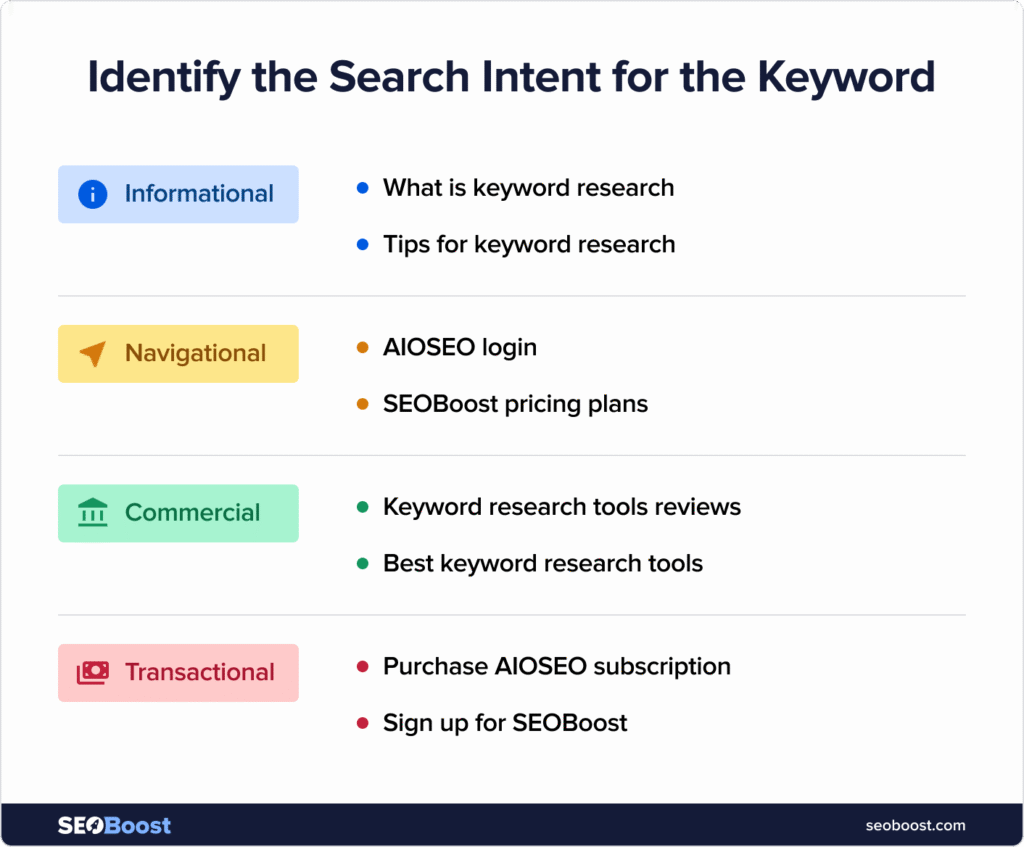
This is why, it’s important to understand the 4 different types of search intent when creating content. You should build a strategy to cater to different intent types and categorize where your target audience lies.
When I analyze a keyword, the first thing I do is create an SEOBoost Topic Report. It creates 7 different types of reports for the focus keyword, analyzing the existing content and what gaps I can fill.
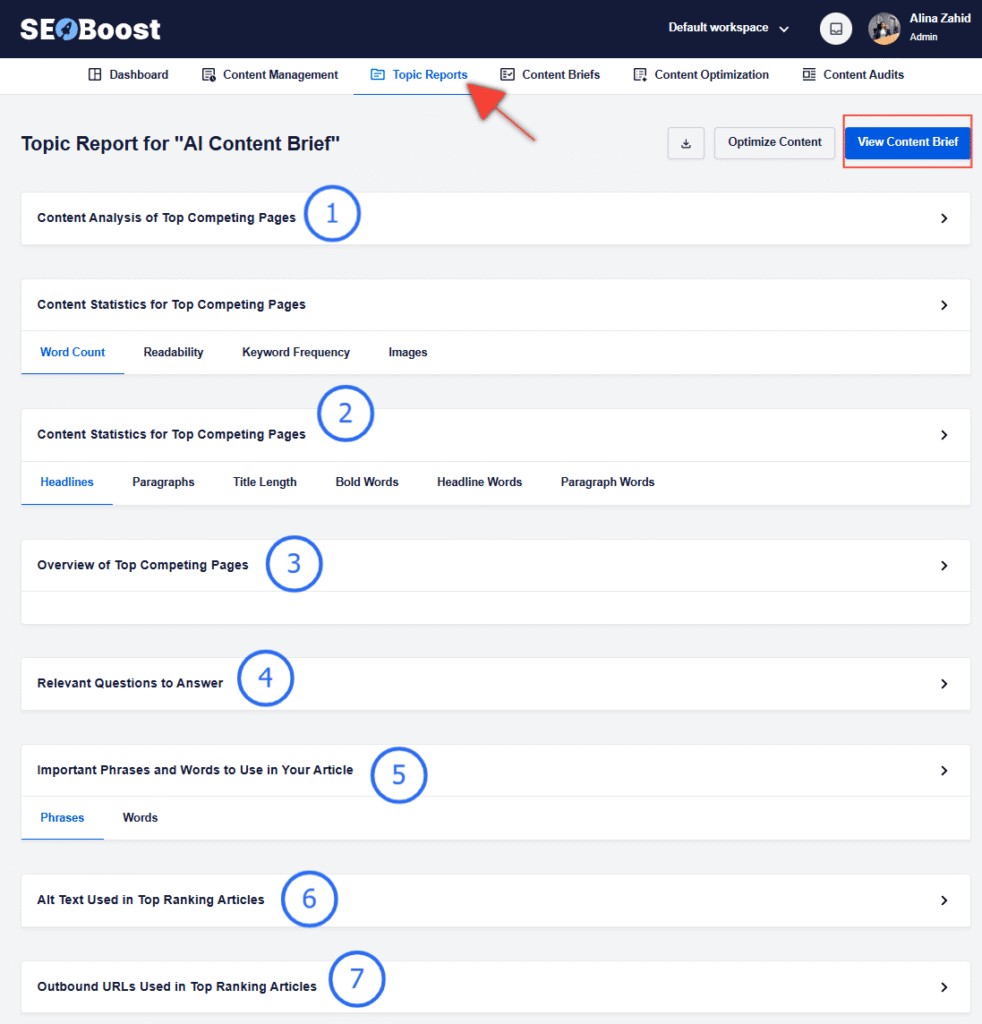
This helps me map out the intent behind that specific keyword and create content accordingly.
You can also pair SEOBoost’s use with another keyword research tool to see other factors, such as the search volume and keyword difficulty. Together, it’ll help you target the keywords that have a better chance at ranking.
But remember, intent decides the format of your content. If the keyword intent is commercial, you should focus on creating comparisons, rather than simple educational content.
2. Build Content for Depth, Not Fluff
Content depth is one of the strongest SEO signals today. Google wants expertise, original insights, examples, statistics, and completeness and not just surface-level articles.
This is where SEOBoost saves hours, honestly.
Like I mentioned before, the Topic Reports feature generates different types of reports. And one of the best things about those reports is that they can easily help you categorize:
- Ideal word count
- Required subtopics
- Contextual keywords
- Must-include questions
- Missing competitor angles
- SERP-approved outline patterns
The best part is that it directly integrates with the Content Briefs feature, and you can generate a complete outline using these recommendations.
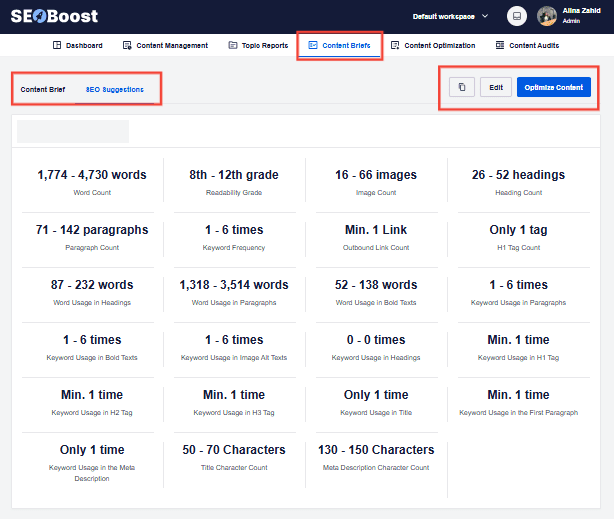
This works especially well for content teams, allowing you to create multiple briefs for different team members.
3. Optimize Your Content as You Write (Not After Publishing)
One of my biggest SEO mistakes early on was publishing content without optimizing it later. That approach doesn’t work anymore.
Google now evaluates pages instantly, and under-optimized content rarely reaches page 2, let alone page 1.
That’s why I use SEOBoost Content Optimization while writing. You can write directly in the editor or copy-paste from Google Docs. It analyzes your content and provides real-time feedback on how to improve your content.
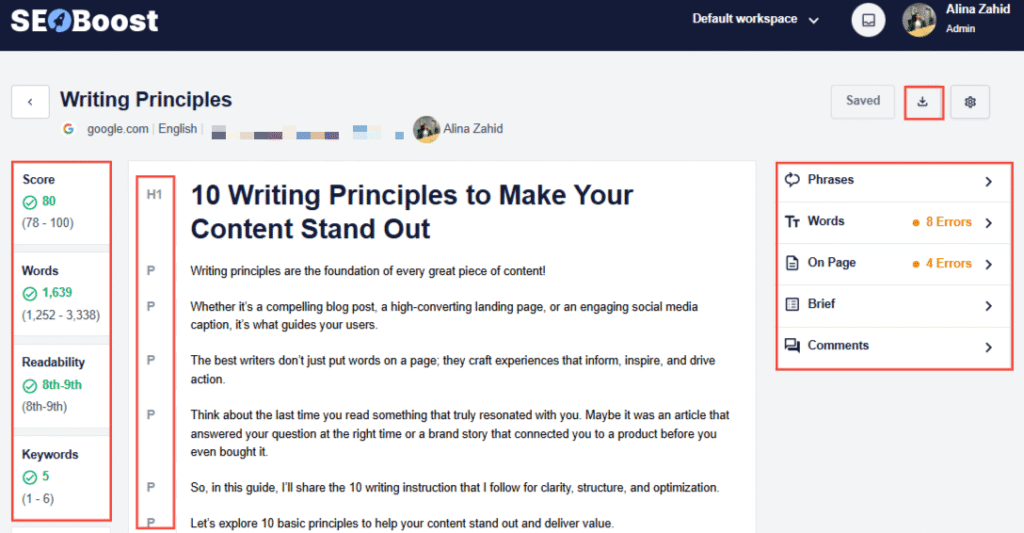
The real-time recommendations help me:
- Fix readability
- Adjust headings
- Strengthen metadata
- Increase content depth
- Improve internal linking
- Add contextual keywords
- Improve semantic relevance
By doing this, you make sure that by the time the content goes live, it will already be aligned with what Google expects.
Think of it as writing with Google’s playbook open beside you.
4. Improve User Experience (UX) as a Ranking Signal
Google’s ranking systems now heavily evaluate user engagement signals. If your page loads slowly, is confusing to navigate, or appears low-quality, your rankings suffer.
This is why, it’s important to pay as much attention to technical SEO as to on-page SEO. It ensures that your site runs smoothly and that the content on it does too.
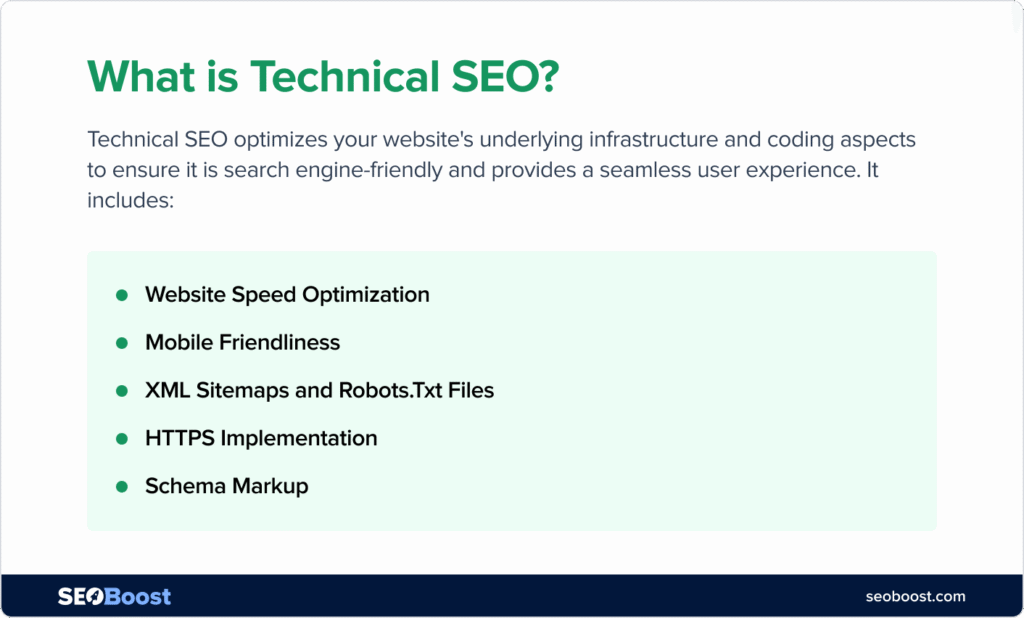
A few factors that you should optimize for include:
- Fast load speed
- Scannable writing
- Simple navigation
- Mobile-first layout
- Clear headings and spacing
- Clean design and zero clutter
Remember, great UX increases overall engagement time, which can help reduce bounce rates and signal to Google that users are getting value.
5. Strengthen Internal Linking To Build Topical Authority
Internal linking has always been one of those quiet but powerful SEO techniques that you can use to create topical authority. But I’m glad that more and more writers are including it in their content strategies now.
It helps Google understand the connection between topics, improves crawlability, and distributes authority strategically.
I build internal linking structures, such as content silos, grouping related posts and linking them in a way that signals expertise.
This is where AIOSEO’s Link Assistant becomes incredibly useful. Instead of manually scanning articles to find linking opportunities, Link Assistant automatically analyzes your content and suggests contextually relevant internal links between related pages. It shows you exactly where to add links, which anchor text to use, and which pages would benefit most from additional internal authority.
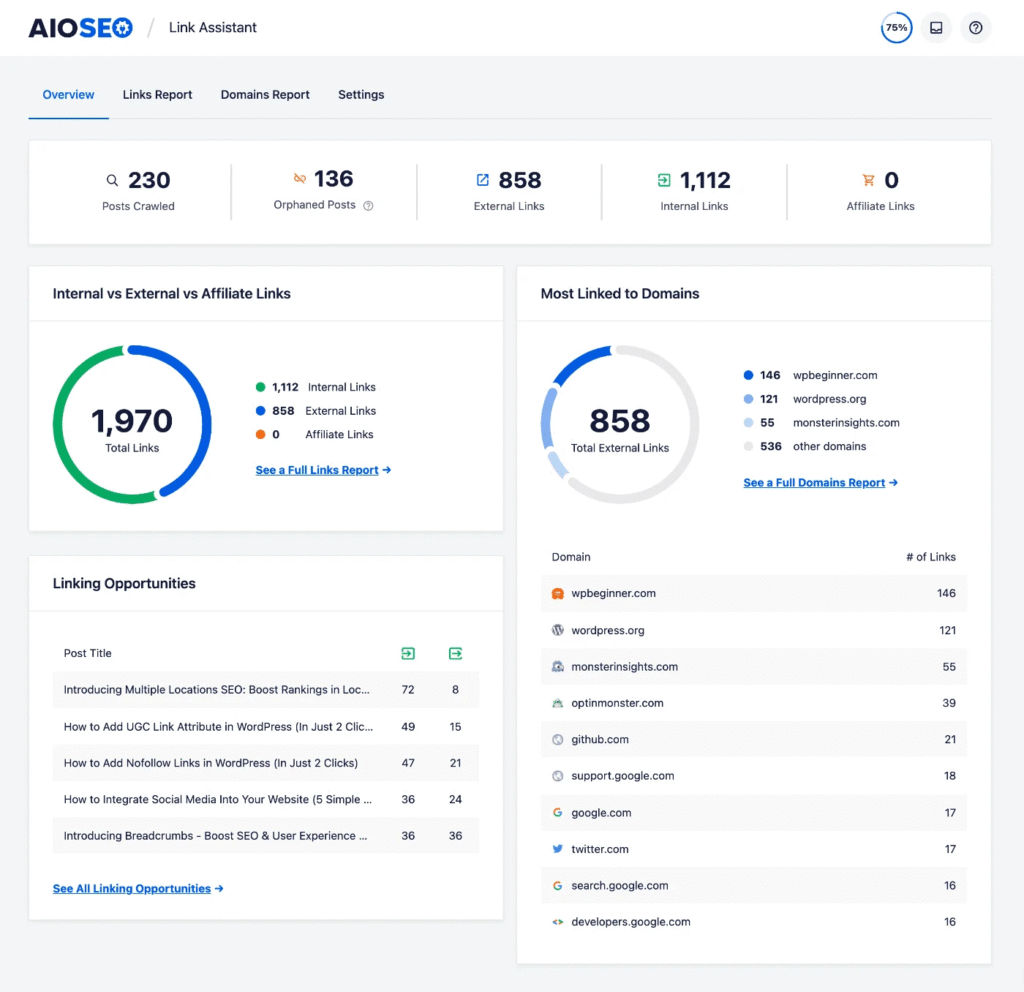
I also use Link Assistant to identify orphaned content, which is pages that aren’t linked to from anywhere else on the site. These pages often struggle to rank because they sit outside your topical structure. With a few strategic internal links added through Link Assistant, they can quickly be pulled back into the content ecosystem.
6. Use AI Tools Properly (Draft With AI, Optimize With SEOBoost)
AI can produce content quickly, but unoptimized AI content does nothing in search and often gets ignored by Google.
I would recommend creating the initial draft or the outline of your content using AI writing tools like Copy.ai or Writesonic.
Then, edit it, add to it and refine however you like. Once you’re done or as you’re writing, run it through SEOBoost’s Content Optimization feature. This will help you optimize your content for search engines.
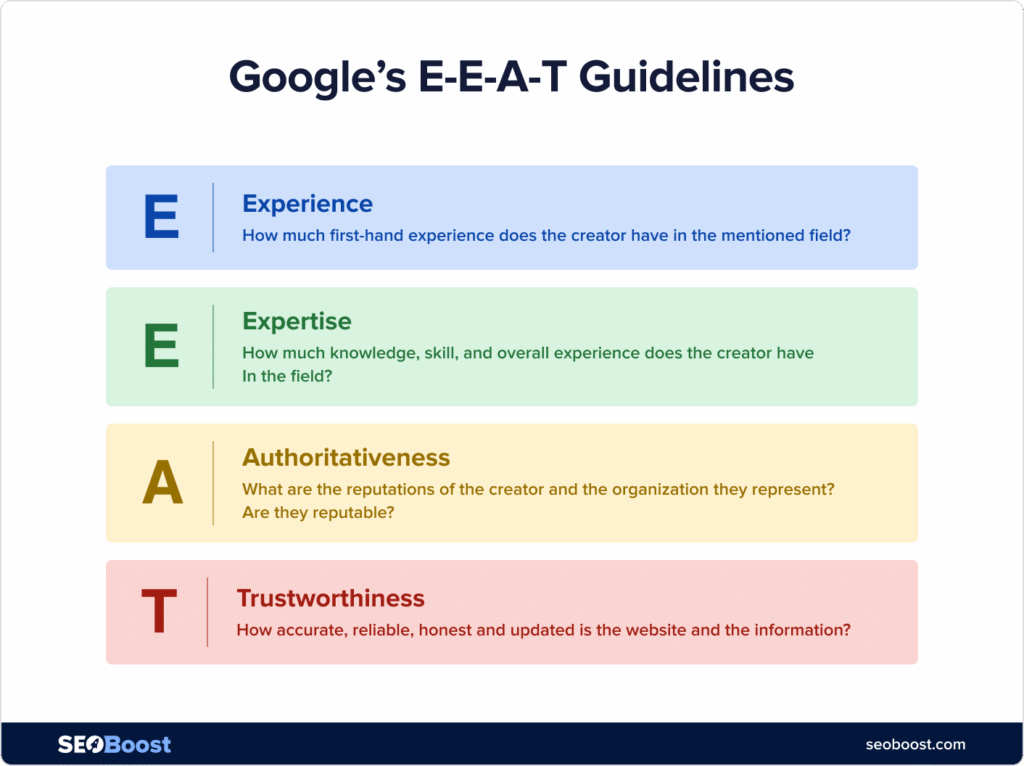
Make sure you add real experience, examples, and insights manually to fulfill the EEAT guidelines.
This hybrid process produces powerful content that’s original, accurate, and aligned with real search expectations.
7. Update and Refine Existing Content Regularly
Content decay is faster than ever. I now refresh content every quarter, for without updates, rankings can drop almost overnight if a page isn’t actively maintained. Even evergreen content isn’t immune anymore.
Content decay refers to the gradual (and sometimes sudden) loss of rankings, impressions, or clicks on a page that once performed well. It usually happens because search intent shifts, competitors publish fresher content, or the information on the page becomes outdated.
This is where SEOBoost’s Content Audit completely changes the process. Instead of guesswork, it generates a complete audit report for the piece of content you’re auditing and analyzes what needs to be fixed or improved.
You can also plug the content into the Content Optimization feature and implement the changes directly in the editor.
The biggest advantage is prioritization. Rather than rewriting everything, I know exactly which pages need attention first and what type of update will move the needle, whether that’s refreshing examples, expanding sections, improving internal links, or aligning the content with current SERP expectations.
More often than not, these content refreshes outperform brand-new content. That’s because you’re building on an existing foundation of authority and links instead of starting from scratch, which is why content audits have become one of the highest-ROI SEO activities in my workflow.
8. Build Entity Signals and Brand Authority
Entity SEO, meaning Google’s understanding of who you are, what you offer, and the topics you’re authoritative in, is now a major ranking factor.
You can build entity signals through:
- Schema markup
- External mentions
- Clear About pages
- Consistent branding
- High-quality author bios
- Interconnected content clusters
This makes your brand trustworthy in Google’s eyes.
Final Word
Stop chasing algorithms and instead, focus on creating the most helpful, complete, and trustworthy content in your niche. The Google of today is powered by AI models that understand context, intent, semantics, and user experience at a level none of us could have imagined a few years ago. And that’s exactly why SEO best practices have evolved: it’s less about gaming the system and more about aligning with what real people want when they search.
For me, using SEO tools like SEOBoost has become non-negotiable because they bring clarity and automate the content creation process to a large extent.
And with the right workflow and tools, SEO is still the most scalable and cost-effective growth channel you’ll ever invest in.
FAQs
What are the 5 important concepts of SEO?
The five most important concepts of SEO are search intent, content quality, technical optimization, user experience, and authority. Understanding intent ensures that your content aligns with what users want. Quality and depth help you stand out in competitive SERPs. Technical SEO ensures your site is crawlable, fast, and structured correctly. UX signals whether users find value in your content. And authority helps you build better content.
What is the 80/20 rule for SEO?
The 80/20 rule for SEO says that 20% of your content drives 80% of your organic traffic. This is why it’s more effective to produce fewer high-quality, intent-aligned pages than large volumes of shallow content.
What are the 3 C’s of SEO?
The 3 C’s of SEO are Content, Code, and Credibility. Content refers to the relevance, depth, structure, and helpfulness of your pages. The code includes technical SEO elements, such as schema, metadata, internal linking, and site speed. Credibility encompasses backlinks, authority signals, EEAT, brand trust, and user satisfaction metrics, all of which influence how Google evaluates your expertise.